Sunday, 14 July 2019

RASA 2019 Reflection - by Philip Erasmus


Freedom Challenge RASA 2019 Reflection

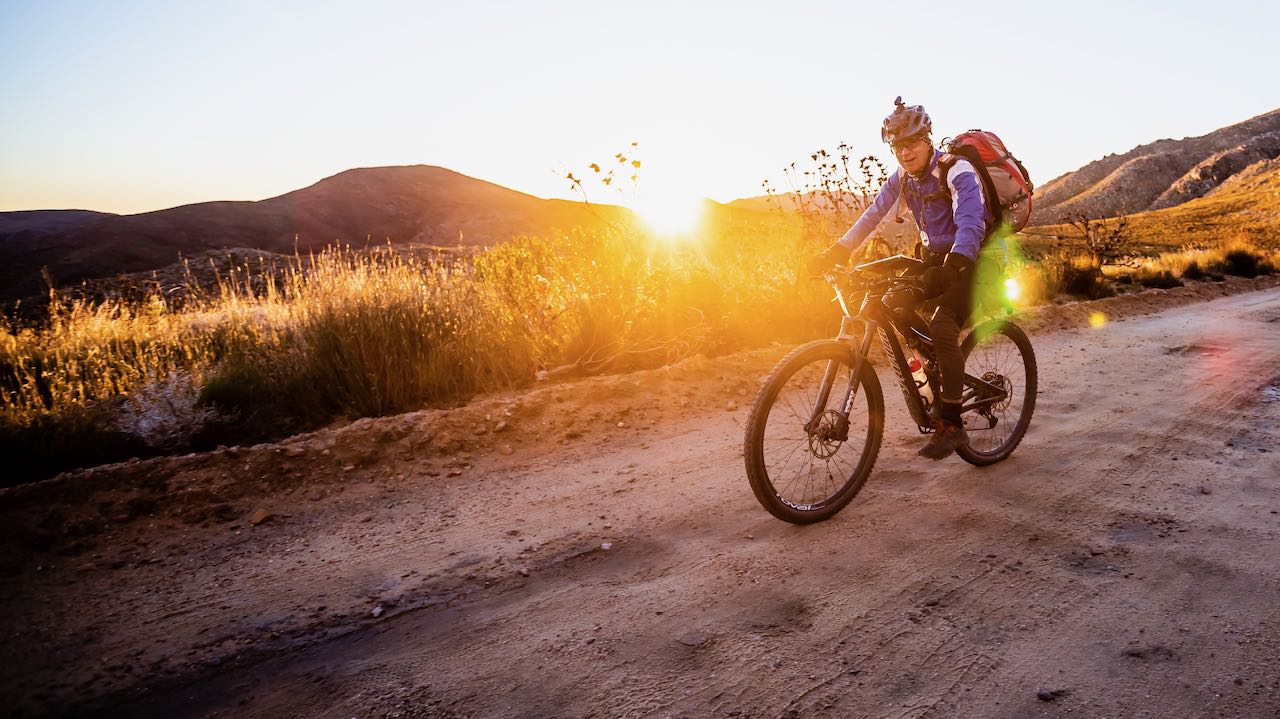
So what do you say after such an epic journey? The Freedom Challenge motto of Adventure Guaranteed was achieved. This was a journey that was very adventurous and I had a great adventure. My expectation from the race was fulfilled. Having done it before in 2014, I knew what I was letting myself in for and this time was even better. This year my aim was to be the first 70 year old to complete this challenge.


My original plan was to ride 19 and half days, and I managed to keep to that schedule all the way. I was greatly helped in achieving this objective by the people of Group two, with whom I departed from Pietermaritzburg on 18 June. Up to Rhodes we rode as a unit, and although there were some splits towards the end of some of the days, we always gathered together again at the end of the day and planned the next day’s start as a unit. This was reduced to six as Sarah was always only going as far as Rhodes and RG du Toit had a plane to catch!

From Rhodes the six of us stuck together up to Jakkalsfontein, where cracks stated to appear. My schedule had the next stop as Toekomst, but some of the people in the group wanted a shorter day. Willem Kamstra also decided to follow his own strategy and left us. Johan Radcliffe and myself decided to split from the other three after Struishoek and had a fantastic ride together from there on.

What can I say about Johan Radcliffe! This guy, who made it very clear at the briefing that we do not share the same religious believes, did more for me during the rest of the journey than anybody could expect from his best and most loyal friend, and we only met on 17 June for the first time! Our relationship started forging when we were the only two who decided to go around and cross the Umkomaas on the bridge and not get our feet wet by walking through the river. He is 20 years younger than me and could have left me whenever he felt like it, but he liked this “old man’s” race schedule and strategy and decided to sick with me. Every now and then he would leave me and skittle up a hill or down the road, only to wait for me to catch up again a little later. When we encountered head winds, he would spend more time in front, but we also worked together quite well on a number of occasions by rotating every kilometer. Sometimes I did not know where the strength came from, but I managed to do my share. We had a wonderful time together, stopping for snacks and chatting as we cycled along. Johan is great conversationist and loves talking. I tend to listen more, but we gelled! He would share his mussels or sardines with me and I would share my biltong and droëwors with him. We became a great team and I really enjoyed his company!


Then came Stettyns. I had my doubts and fears about getting up the last hill of Stettyns and as it turned out, it was not unfounded. By this stage, my strength was low and I really had trouble getting up that hill. A while before we got to that point, Johan saw that I was struggling with carrying my bike. He then suggested that I take my saddlebag, which weighed about 5 kg (probably the same weight as Johan’s rucksack), off and he stuffed it into his rucksack and carried it for the rest of the way. During the first half of the final hill, Johan would carry his bike some way up the hill, leave it there and then come back and take my bike up to his bike, while I struggle up the hill. This carried on until we were half way up, when Leon Erasmus, my brother’s son and a racing snake who joined us at 02:00 that morning, appeared on top of the hill. He directed us, but seeing how I was struggling, came down and carried my bike up the rest of the way. I am not sure if I would have made it up that hill without this help!

Leon Erasmus said that he would stay with me once he caught up with me and was true to his word. It is a bit of a shame that it only happened at the top of Stettyns as I would have loved to spend more time in his company, but it was a great joy to do the last number of kilometers in one another’s company and cross the finish line together. It must also have been a great feeling for my brother to be able to witness and experience this.


The low point of my journey was when I crashed on the hill down towards Killian Pass just before Rossouw. That could have ended my race, but I came through with only a brased knee and no headlight. Here I must thank Harko de Boer, who lent me his second light for the rest of the journey.

At the end of something as mammoth as this, there must be some thank yous! The first must go to my wonderful wife Sue, who was at the other end of the line every night when we had cell phone or wi-fi and we could phone her. Initially she was not too keen on me doing this grueling race again, but after I completed it she said she was glad I did it and that she was proud of what I achieved! Her encouragement carried me daily. Also all the people on my WhatsApp Group with their positive commentary! That helped me to make sure I do not disappoint them. The race organisers for putting up and excellent event again. We were blessed with the most wonderful weather! We had a number of difficult days with the wind, but generally the weather was just about perfect. There were a number of days when I just had to hang in there and give my best to survive! My motto then was "we shall prevail" and prevailed we did!

I must also thank the Lord Jesus Christ for giving me the strength; faith and self believe to achieve this journey. I worked out a schedule and in spite of some very difficult days, managed to keep to it right to the end.

Total time 19 days 13 hours 55 minutes; total riding time 247 hours 34 minutes; total distance 2,168 kilometers; 33,195 meters of climbing; average speed 8.74 k.p.h.; fastest day 11.92 from Willowmore to Prince Albert; slowest day 3,62 from Trouthaven to Diemersfontein via Stettynskloof; longest day 170 km from Kudukaya, Cambria to Willowmore at 170 km; shortest day Hadley to Kudukaya via the Osseberg and Grootriver at 48 km, which was also to second slowest day; lonest day 16 hours 28 minutes from Prince Albert to Rouxpos via Gamkaskloof and the Ladder; shortest day 8 hours 9 minutes from Vuvu to Rhodes via Mcambalala and Naudesnek Pass at 8 hours and 9 minutes.


Wednesday, 26 June 2019

RTR – the race that loses its young - by Carlo Gonzaga

 More musings from a novice


“Are you joking? Two hundred metres? Is that all we missed it by?”

In a bike race that’s 475km long, with 13’000 metres of vertical ascent that’s what it came down to. Two. Hundred. Metres. If I could, I would have cried. But I couldn’t. The tears would have frozen my eyelids shut. Quite ridiculous really.

‘Ridiculous’ is probably the appropriate description of the Freedom Challenge in general and the Race to Rhodes specifically. The Freedom Challenge is a 2300km race across South Africa that takes place in South Africa’s winter months. The Race to Rhodes follows the first 475km, which, in the scheme of things, doesn’t sound like a big deal. But it is.

 The general format 
This race is categorised as a mountain bike race. Having now completed this event this categorisation feels a little like classifying both apples and tomatoes as fruits – technically correct but obviously wrong. The race is unique in quite in a few ways. It describes itself as a ‘non-stop, self-sufficient and, self-navigated’ mountain bike race. Like much of life the devil is in the detail and facts do matter.

The race starts at the doors of the Pietermaritzburg city hall and ends in the tiny village of Rhodes, almost at the foot of South Africa’s highest peak, Ben Macdhui. As the F16 flies it’s 287km and google tells me it’s about a seven-hour drive by car. So far, so good. Obviously, we are piloting neither and are told it’s 475km, minimum. “Urm… what’s this minimum story” you ask, in the same tone as one of the “rights reserved” legal letters. That would be a very good question to ask.

The ‘mandatory’ (read: you must follow this line or be disqualified) route to Rhodes is hand drawn with a thin green marking pen across 18 A3-size paper contour maps. I repeat: Eighteen. Paper. Maps. Until March this year I couldn’t remember what was on a contour map and was surprised that there are two north arrows on such map, not pointing the same way. I would try and explain the ‘two norths’ thing but really cannot.

If we follow that thin green line diligently, we should clock up 475km. That’s highly unlikely as the rules prohibit the use of any form of GPS device. No Google maps. No Garmin. Not even phone-a-friend to try and direct you left or right. Getting lost is an absolute certainty. Consequently, the 475km in the brochure is really just a guideline. It would be reasonable to think that, as a consequence of this prohibition, the route would follow large, well-marked roads. This race is many things – but, as I’ve come to learn, ‘reasonable’ is not one of them. To add more weight to your map-filled in-tray there are 11 pages of written narratives that are meant to support these maps. These narratives contain gems like “Put your bike down and follow one of these tracks for about 20 metres. You should find a jeep track in the bushes. Retrieve your bike and follow the jeep track across the base of the spur.” I was fully expecting to find a mall with a Spur Steak Ranch at the end of this jeep track. And my absolute favourite… “This is then followed by an equally ridiculous 400 metre climb”. Their words, not mine. So… “No” to following large well-marked roads.

When I received my 18 A3 maps and read the narratives for the first time I ‘kakked’ my chamois. The green line follows cattle paths, an assortment of tracks, and some roads. Often it simply asks you to follow geographical features like mountain ridges, dongas or rivers. For enhanced entertainment the line crosses more than ten rivers (not where the bridges are) and goes up or down a handful of sheer cliffs. (I’ve learned the closer the contour lines to each other, the steeper the cliff. Good to know.) Often there is a track on the map but, rather disturbingly, no such thing on the ground. Equally as often there is one track on the map and seventeen on the ground. I asked a mate who had done the race for some info and he sent me 84 emails with over 200 attachments. Asking for some in-person guidance you got pearlers like “Turn right at the apple tree. What apple tree Dave? Someone ate an apple & dropped the pips there last year, there should be an apple tree there this year.” Turn left at the “blue house” or at the “edge of the plantation” occur frequently. As it turns out people paint their houses and plantations get harvested, quite regularly. And then, obviously if you think about it, cattle tend to be quite unconcerned with keeping to the same path the surveyor-general saw when he plotted the contour maps 15 years ago. And that’s just the “self-navigated part”.

The race is also “self-supported”. That means you carry everything you may need for about 5 days on your person or your bike. You are expected to finish with the equipment your started. Presumably, you are also expected to finish with the same body you started. The rules are not specific in this regard. You may not receive any outside support while on route or you will face disqualification or a time penalty. If your bike breaks in half you are expected to fix it with the tools at hand which are most commonly trees, cattle, and rivers. If you break in half, you are expected to fix yourself. There isn’t medical assistance on route. Sure, you can call a doctor, but unless his advice is to cut your losses and beat yourself to death with your own phone you may have to do the stitching yourself. Some participants actually carry suture kits. In the longer, 2300km event, most carry antibiotics. Stories abound of broken bike frames splinted together with branches and saddles held in place with fence wire. I was even taught that you can ‘weld’ with the foil cap of a wine bottle and a lighter. After downing said bottle of wine, I suppose anything is possible. While you may use “commercially available” resources this is a rather moot concession in the rules as the track is in rural, mountainous, South Africa for much of the time. About the best you’ll get is a shepherd or herdsman. He won’t speak your language, even if you speak his. If you’re lucky he’ll have a horse. If you’re unlucky he’ll have six and a half hungry dogs.

Don’t expect water tables with cheering wives’ or children filling your water bottles. Instead, expect community taps or streams to fill your bottles and the odd informal traders selling beer, warm coke or Chinese nik-naks. There are five checkpoints on route that you must check into. Ideally you should check out of them as well. These are mostly community operated lodgings located in villages, or more often, in the sticks somewhere. Some of them don’t have electricity and a couple don’t even have running water. Lodgings are modest by normal standards, but seven-star when you’ve got 300km and 8000m of climbing in you. At the last checkpoint, at a modest village labelled on the maps as ‘Vuvu’, you will sleep in the huts of the local residents, who will move out of their dwelling for the night. Your dinner will be served in the office of the head of department at the local junior secondary school. You will, as a rite of passage on the trail, freeze your saddle sores off if you attempt an evening bucket shower in Vuvu. True story, no embellishment. There is a passing reference to inclement weather in the rules. The clue to look out for is in the mandatory clothing requirements of ‘base layers, other layers, waterproof layers and emergency blankets’. The route tops out at about 2600m. This is well into snow territory

when the conditions are right. Or wrong if you’re on a bike. This year we recorded -8 degrees and it has been known to get well below -15 degrees. Not Fahrenheit – the other one. This year (and apparently in many years) the wind was gusting up to 80 kilometres an hour. Snow in a gale becomes sleet. Dust particles become birdshot. Your sense of humour disappears quicker than a politicians’ promises after election day. This year riders had to look out for steel roof sheeting that had become airborne. I’ve seen videos of bicycles being lifted off the ground as riders grimly hold onto to the handlebar. If you see men peeing on their shifter cables, it’s because they’ve become frozen.

If I were honestly marketing the race to newcomers, it would go something like: “Come and join our Race to Rhodes. You’ll definitely get lost, most likely in the dark and probably in sub-zero temperatures. We hope you’ll make it through all the river crossing and not fall down a cliff. You will be wet. It will be fun. As a midfielder you’ll be riding about 8-12 hours between support stations so you should be able to carry that much food and water with you. You must also carry all your own clothing, medical kits and bike spares for any eventuality. Be mindful with baggage as you will have to pick your bike up and over fences and should be prepared to hike up cliffs with your bike on your back. It will be fun. As there is no way to get a motor vehicle to many parts of the route please ensure you have airborne medical evacuation as part of your medical insurance. That will not be fun.” 5:00am. 71 hrs since departure. Top of Lehanas. Middle Earth, so it seems. Knees tucked into my chest. Lips pursed. Breathing shallow to limit the cold air into my already chilled lungs. I am lying on my right side directly on the ground, in what probably looks like the ‘foetal’ position. I am shivering, almost uncontrollably, but not quite. My eyes squint through foggy lenses into the moonlit night. My ears are filled with the continuous crackle, pop, and hiss of three space blankets fluttering in the icy wind, anchored only by a hand, a foot, or some other bodily appendage of their owners. It’s around five in the morning and my handlebar mounted temperature gauge looks like its reading minus-four- point-something Celsius. I would try and get a better look but the batteries in my helmet mounted light seem to have lost their amps, like we have lost our bearings.

We’re at the top of Lehanas ‘Pass’. That much we know. We’re about 35km, or two-and-a half hours from the end. This we also know. What we don’t know is exactly where we are. Therefore, we can’t be exactly sure of where we need to go. Maddingly, we know the track we need to find is so close. So. Damn. Close.

It’s been seventy-one hours since we left Pietermaritzburg, and we’re around 440km down the official track. Myself and my two travelling companions have had no more than four hours sleep in total since our city hal departure three days ago. Our last water and food refill was twelve hours ago.

Half an hour earlier we were walking around in circles looking for the track that would take us off this exposed icy plateau. In one last gasp attempt to locate our exit, we each forge out a few hundred metres in opposite directions. Our lights, batteries weakened by the cold, tentatively prod the darkness ahead. The darkness gives no quarter, gives no inch. We reconvene once again. No good news. None of us find the road we intuitively know is there. Too tired and cold to think through the problem we abandon our joint quest to finish the race in under three days. To achieve that we needed to find that road by 3:30am, latest. Since we’re no longer cycling, our sweaty cycling kit starts to freeze in the increasingly stronger

wind. We don all our remaining clothing, four or five layers in total, including that damned space blanket, and decide to bunker down until the sun comes up. Lying on the ground, I recall thinking to myself that this is probably how people die in the cold. They just… well… they… just… lie there…. and, er, …. die. No fanfare, no last wishes, no dramatic rushes to save yourself. Just a very, very long sleep.

Lehanas Pass is legend on the trail. The adventures birthed on Lehanas generally secure you a front row at the bar, drinks included. Why it’s called a ‘pass’ is still somewhat lost on me. There is no road. Not even remnants of a road. In fact, there could never have been a road as the route required to traverse the 8,4km from base to peak requires a careful balancing act on the spine of a mountain range. It’s a venus fly trap. It’s a con artist. She is heart achingly beautiful in photos. Gorgeously smooth from google earth. I sound smitten. She draws you in. And then she’s Glenn Close and bunnies. She’s Hannibal Lecter making dinner, for one. It seems that Lehanas has a score to settle with almost all riders. In those 8,4km you will ascend 1000 metres. That’s nearly the same as the last push to the summit up Kilimanjaro. Except you’re the porter with a bicycle. Gradients exceed 40% and the upper reaches require scrambling up ledges that are head height. On a particularly steep windswept section I could do no better than flatten myself against the grassy, rock strewn slope, face into the ground. And sort of leopard crawl with two legs and one arm, the other securing my bike to my back. On one steep section Pieter was throwing his bike up the hill and then stepping up. The wind on Lehanas is something to behold. It doesn’t ‘blow’. It roars up its slopes like the death charge of a wounded lion – you hear the grunts but can’t see the lion until the last second. It tears through shrubs and trees, branches snapping back like mortars above Normandy. It clutches at your clothing and your bike. It’s like getting in a boxing ring with Sugar Ray Leonard in his prime. The punches come from nowhere but are everywhere. I have had riders tell me of having their bikes ripped from their grip by the wind and having to crawl down to retrieve them. A few riders have actually been trapped on the mountain, unable to crest the summit for the ferocity of the wind. For a reason unknown to me there is a blue container at the summit. One year, riders had to break into it, seeking refuge. When they wanted to leave, Lehanas had the last laugh. They were locked inside for an hour or so, unable to open the door. Did I mention that, through all this gradient, wind and weather, you have to carry your bike? You do. Unavoidable really. How do you train to carry your bike up a 40% rocky incline; in -3 degrees centigrade, in a gusting, 100kph wind? If you know, do tell.

At about 6:30am the darkness finally begins to recede. First, the ridgelines of the surrounding mountains show themselves in monochrome silhouette. At this point the temperature always drops a few more digits. I am standing now, space blanket wrapped twice around my torso. Still shivering. Henry and Pieter are stoically holding onto their fluttering space blankets, still grounded. As the light pushes the darkness away, I start to make out a straight-ish line in the distance. Not too far – about two hundred metres. A few minutes pass. You must be joking? That straight line is the road.

That’s the thing with being lost. One moment you are lost. And, eventually, at some other moment you are instantly un-lost. You don’t gradually un-lose yourself. You either know where you are, or you don’t.

10pm. 15hours from the start. The Wall.

I am walking down a hill I’ve just pushed up. I am shouting “Hello” at darkened rural houses. I am hopeful that my waking someone up will somehow be forgiven because I have done so with a “Hello”. Dogs bark, which I’m happy for. I figure ‘barks’ plus ‘hello’ should get someone’s’ attention. Finally, I see a light in a window of a small brick one-roomed building. I start with “Hello” in conversational tone. After escalating my conversational “Hello” to a rather hysterical ‘HAAALLOOOWW’, I advance toward the lit window. Mercifully the dog doesn’t eat me, and the resident doesn’t think I’m an intruder. As we try to bridge the language gap, he points frantically up the road I’ve just pushed down, and supports this gesturing with “Straaait, Straaait”. At that point I see two lights walking up the road. Ok… the lights aren’t really walking – they’re attached to the bikes of Peter and Henry. We’ve been riding a few minutes apart for the last 15 hours. I dash out the yard, thanking the local who is still gesturing and shouting “Straaait”. Henry and Pieter have done this four times between them and they must know the route. I ask if I can ride with them a bit. Three navigators are better than one. Or so you’d think.

Two hours later we finally acknowledge we’re lost. We cannot pinpoint where we are on the paper maps. We’ve asked more local residents. Language is a problem. I must learn Zulu. We have travelled about 5,3km on an incorrect road, most of which has been uphill. We round a corner and Pieter correctly concludes that we are going in the exact opposite direction that we’re meant to be going in. We round another corner, this time in the right direction, but facing a steep uphill. The ‘protocol’ for getting un-lost is retracing your steps until you can pinpoint where you are on a map. Not wanting to scale that climb, just to have to come down it, we sagely agree to do the adult thing and acknowledge our mistake and go back down the 5,3km we have just come up. Given the now almost zero temperatures we stop to layer up for the descent. I record a video on my phone. 20 minutes later, at the base of the climb we find our error: just metres up from where I met Peter and Henry the good road breaks left, with a track continuing straight to a rock-infested section referred to as ‘The Wall’ by riders. It is un-rideable which is the clue that tells us we are on the right track. Days later, after the race, I review our GPS tracks that the race office gives me access to. The point at which we turned around, after 2 hours and 5,3km of uphill, was just two hundred metres from the road that we were meant to be on. We had taken the vehicular road that bypasses the un-rideable section we call The Wall. If we had stayed on it, we would have re- joined above the un-rideable section and been hi-five-ing and back-slapping at our genius navigation. This sounds made up. It is not. I have pictures. Two hundred metres. Again.


“Race office, we have a problem”

Per the rules you are allowed seven days to complete the course. Sounds like a long time for just 475km. Until you consider that you continuously stop to check your maps; the path is largely on tracks and grassland; and has its fair share of un-rideable sections. Compounding matters there’s the hills - by the time you’ve quaffed your first G&T in Rhodes you will have ascended the equivalent of Mt. Everest one and a half times. Of the 49 starters in this year’s edition just two finished in under three days. Only six finished in under five days. Of the eight that never made it to Rhodes, one was washed down a river he was crossing. And he wasn’t on a boat at the time.

At race briefing it became apparent there were three other riders with a sub three-day game plan, including myself. This was my first time so my ambitious plan could be blamed on first-time stupidity. Roger was on a single speed, rigid bike. Think about that for a moment. I subsequently learned he is a plastic surgeon, so I blame his crazy attempt on second-hand anaesthesia inhalation. I don’t know if that’s physiologically possible, but I hope you get my point. Peter and Henry had narrowly missed a sub three-day attempt previously and their plan was fuelled mostly by revenge.

There is a sub two-day strategy, but that is currently reserved for just one rider. Just five riders have ever managed under 2,5 days. A veteran of The Trail, Mike Woolnough was on track for a sub-two this year until the sleep monsters and weather tightened their grip. To achieve sub three days, you essentially must ride double the time of other riders, each day. Conceptually not difficult to grasp, but there are a couple of critical pinch points to consider. First, you probably need to ride the first 200km to the remote lodge in Nstekeni Nature Reserve in one go. That comes with 6300m of climbing. You should get that done in about 18 hours, leaving you with a couple hours to sleep, eat and consider other necessities before mounting your steed at around 4:30. A warm up, so to speak. Assuming you won’t get too lost during the day you’ll have the privilege of negotiating some tricky night-time navigation. If that goes ok-ish you’ll have the morning to get to Vuvu. Its highly desirable to get past Vuvu and to the foot of Lehanas in daylight so you can get your bearings on that little blue container 8,4km away. If you get that right, you’ll get to Rhodes about in about 2 days and 15 hours. Like Roger did. Be like Roger.

Don’t be like us.

Leaving Vuvu at 5pm already put us on the backfoot as we’d only get to Lehanas at around 6pm. It’s darkest just after the sun is fully tucked away and the moon isn’t quite shiny yet, making it difficult to get bearing on aforementioned blue container. So, in what history will judge as a… mmm... err…. let’s just go with ‘kak’ decision, we decided to try an alternate route up Lehanas. This involves not actually going up Lehanas at all but finding an adjacent mountain to the west and scaling that instead. Just writing that plan down sounds bad. Trust me though, it was a good idea at the time. No – beers were not involved.
Roll forward four hours. We’re back at the foot of Lehanas, around 10pm. We found the mountain to the west. We even found the track on the mountain to the west we were meant to be on. For 4km. Then we ran out of track, skill, experience, and humour. We scribbled messages in the ground. We found the southern cross. We studied our maps and compasses. Still only 4km progress in three hours. At about 9pm we called the race office. “We have a problem”. To his credit and our good fortune Chris Fisher, race director, took our call. He advised us, as he had previously, to try Lehanas instead. I don’t even think he said “I told you so”. Mountain 1 – Three Musketeers 0.
16 hours 33 minutes. That’s how long it took us to reach Rhodes from Vuvu. 51km according to the maps. 75 hours, 33 minutes since we had city hall in our rear-view mirrors. Four hours sleep. And we missed our plan by 3 hours 33 minutes. Two hundred metres. Twice.

The Thing

But here’s the thing: I feel fulfilled. Energised. Richer for the experience. Even taller. I inhaled more just than a few beers and slept for a week after. Sure, I got lost for some 9 hours of the 75 hours I was on the trail, without which I would have smashed my goal. But that would be too easy. I now value my first time on The Trail. To grow physically you need to stress your body and then, during rest, the body adapts to a new expectation, becoming stronger through each cycle of rest. It’s the rest after the physical activity that makes you stronger.

The Trail under race conditions has more than its fair share of physical stresses. These you will overcome, and be stronger for, with rest and few glasses of wine. It’s the stresses The Trail places on your mind, your spirit, your self, that are uniquely valuable. These don’t happen at the gym, a morning run, or in board meetings.

Getting lost is part of life. It happens all the time to us across multiple spheres. In relationships, business, strategy. With our families. Most often we are in denial about being lost at all. We convince ourselves we are on track. On the trail you are either lost or not. There is no ‘convincing’ yourself. You are forced to face reality; admit to being lost; and start the process of finding your way back. This is the stress. When you find the track, as you will, you will be mentally and spiritually stronger for it. You will be more appreciative of the need to pay attention next time. To be engaged with your surroundings. To prepare better. To be present. You will be more willing to help others, for one day you may need the help of others. These are my lessons from Lehanas.

The Trail is filled with old-school adventure. You will genuinely scramble down cliff faces. You will drop your bike down 3m vertical dongas. You may get washed down a river. You will feel inspired and invincible when you successfully navigate your way at night through the three villages to Queen Mercy; or ride ‘flat-box’ down red-earth wattle strips on the Mpharane ridge on a crisp, cloudless, blue-sky day. You will turn around and look down the section you have portaged up and resist patting yourself on the back. You may even have the need to find the Southern Cross because you lost your compass. You will humbly push your bike up, and down, hills. You will crest the Umkomaas valley and get goose bumps from the view before you descend an impossibly steep track. You will thrash your way through thorn trees, wattles and river debris. All while pulling, pushing, and dragging your bike. Always forward. Always forward.

Most of all, the trail is filled with people. Their aspirations. Their stories. The giant Dalu Ncobo and his wife, Gladys, at Nstekeni. He sleeps with “one eye open” and made us breakfast - or was it dinner - at 2am. Sheila and Charles Raven, their daughter Kerry - hosting cyclists around the clock for three continuous weeks at their home in Glen Edward. The never-ending stories from Dana and Ian Waddilove, whose brother, David, founded the Freedom Challenge in 2004. The giant, syrupy vetkoek that Buhle makes at the modest Masakala support station. The residents of Vuvu who actually give up their bed for cyclists. The children who run next to you for kilometres, shouting “Where are you going? What is your name?”. The spaza shop owners for whom the race represents a mid-year Christmas rush. There is the lone horseman who points to where you should be going and sometimes, seeing the exhaustion written in, and on you, leads you to your path.

This is The Race to Rhodes. This is the Freedom Challenge. 


Monday, 24 June 2019

RTR 2019 - POV video from Mike Woolnough


POV edit from Mike Woolnough's RTR footage. Edit by Llewellyn Loloyd Reblex Photography

Friday, 5 April 2019

Freedom Challenge: The Ultimate Mountain Bike Adventure Endurance Event By Greg Fisher

“I am not a mountain biker!” Although I have enjoyed many endurance activities including running, road cycling, paddling and triathlons for the better part of my adult life, I don’t identify as a mountain biker and have never done a major, multi day mountain bike race. Mountain biking it too technical, too scary, too dangerous and the learning curve always seemed too steep for me to ever really embrace it.

However, I was forced to reconsider all of this when my brother took over as race director of the Freedom Challenge. As a show of solidarity and support, I entered The Freedom Challenge Race to Cradock (RTC) – a self-supported 575 km mountain bike race from Rhodes to Cradock in the Eastern Cape of South Africa. This is a shorter, less extreme version of The Freedom Challenge Race Across South Africa (RASA) – a 2300 km self-supported race from Pietermaritzburg to Wellington that happens in June and July every year [see the sidebar describing the full Freedom Challenge portfolio of events]. Having never done a multi day mountain bike race, or ridden at night, or fixed a tubeless tire, or carried a backpack while riding, or navigated using a map, I was woefully inexperienced for this event when I began preparing in late January for the race in March. My first mountain bike outing on Table Mountain was a jittery, erratic, puffing mess in which I dismounted my bike at least eleven times for what seemed like crazy inclines, declines, rocks, roots and narrow pathways. I came away from that scared, anxious and exhausted. A day or two later I came across a TED Talk on How to Learn Anything in 20 Hours. The essence of the talk by Josh Kaufman is that we can learn to be productively proficient in almost any skill with 20 hours’ of deliberate practice. To do this, the speaker said that we need to: (1) breakdown the skill we want to learn into its component parts, (2) learn enough to know when we are making major mistakes, (3) remove any and all barriers to practice, and (4) practice for at least 20 hours in a deliberate and focused way. I decided to apply this to mountain biking. This entailed watching many YouTube videos and listening to a variety of podcasts about the fundamentals of riding a mountain bike (and about fixing tires, lubing chains, navigation and packing light) [See sidebar for a list of useful video channels and podcasts]. I also committed to ride my mountain bike for at least an hour a day, for a minimum of 20 days in February. In each session, I focused on a specific, fundamental aspect of riding a bike (braking, foot placement, cornering, descending etc.). By the end of February, I had mostly stuck to my plan and although I was still extremely nervous about the upcoming Race to Cradock, I was at least able to get around the Table Mountain trails with only one or two dismounts; things had improved substantially. Additionally, and more importantly, I had really enjoyed the process of learning a new skill. I know that I am never going to be an exceptional mountain biker and I will likely never get any external reward or recognition for my prowess on a bike; but the intrinsic enjoyment I got from developing a new set of skills and improving day-to-day was incredibly satisfying. It generated energy and enthusiasm for an activity I had always kept at a safe distance. As I made my way to the start of the Race to Cradock in the tiny town of Rhodes up high up in the mountains near the border of Lesotho in the Eastern Cape, I was both fearful and excited. I was embarking on something different from anything I had done before, and I would draw on a new set of skills I had only very recently developed. Almost everything about the event was new and novel, and this made it both thrilling and terrifying.


Freedom Challenge events require that rider navigate their way along the trail with just printed maps and written narratives (GPS devices are strictly prohibited) and we carry all our clothing, spares, snacks and drinks on backpacks and in saddle bags. Riders are assigned to small batches of just 8-10 people each, and only one batch goes off per day. There are checkpoints (farms, cafes, lodges etc.) every 30-80 kms along the trail, and each checkpoint serves as a support station providing a meal to riders, and a bed to those wishing to sleep over for a night. Each rider decides how far they want to go each day; the racing snakes cover the 575km of RTC in just 2 days with almost no sleep; but the rest of us (mere mortals) ride for 4, 5, or 6 days with a decent night’s sleep in a farmhouse bed each night.

With all this as a backdrop, I set off with my seven new batch compatriots (none of whom I had met before) at 5am on March 18 th , 2019. We were all focused on making our way to Craddock along the Freedom Trail, 575 km away. The first thing that I realized immediately was how easy and fun it is to ride at night with decent lights. I was then struck by the exhilaration and beauty that come from riding through the transition from darkness to light as the sun emerges from behind a mountain. Having started in the pitch black we were soon confronted with glorious changing colors across the sky as the sun rose behind us while we cycled steadily and deliberately up the hill out of Rhodes.


An hour into the ride our batch splintered as riders of different speeds paced themselves to ride according to their capability and plan. With this came solitude; not the kind of solitude that one dreads, but rather the solitude that I often crave in my usual day-to-day hustle. I found myself on my own surrounded by some of the most magnificent mountains, vistas, plateaus and valleys. My sense of incompetence on a mountain bike gracefully disappeared as I was consumed by the awe of my surroundings and by the challenge of navigating my way from checkpoint to checkpoint. The Freedom Trail is a combination of dirt roads, rough jeep tracks and vague single-track cattle paths across framer’s lands. Most of it is rideable, but there are sections where riders need to dismount and push or carry their bike, due to steep inclines, declines or thick bush. Many parts of the trail need to be very carefully navigated; it is easy to get lost as one picks a way through the vast wilderness that the trail traverses. For this reason local knowledge and experience on the trail are a distinct advantage. Novices, like me, gain a lot of benefit from sticking with a trail veteran (or “blanket wearer” as they are called on the trail because the reward for finishing the Race Across South Africa is a Basotho blanket). I sometimes found myself pedaling harder than I should to stick with those who seemed to know where to go, or I patiently waited for others to catch me so we could navigate the tough sections together. I am eternally grateful to the blanket wearers in my batch – Ray Sephton and Charles Hughes – who so graciously and patiently helped me navigate the tough sections of the trail.


Once the adrenaline and excitement of the start of the race wore off; the reality of the task at hand started to set in: I needed to ride 575 km across really rugged terrain. To get through this, each checkpoint along the trail became an alluring destination; something to focus on. The intent was always to reach the next checkpoint, and to keep things exciting each checkpoint was distinctly different. Some checkpoints were large farmhouses with beautifully manicured gardens

and welcoming hosts who wanted to talk all about the details of the day, others were standalone farm buildings or lodges where riders were left mostly to their own devices, while another was a local pie shop where we stocked up on lamb and venison pies and washed them down with a cold Coke. The one thing that all the checkpoints had in common was great food – whether it was because of the excessive calories burned on the bike, or just the excellent Eastern Cape cooking – the food at each checkpoint tasted delicious and there was always more than enough to eat. Anyone who has done a tough endurance event knows the endorphin high that comes from finishing up a long bout of exercise and then allowing one’s body to rest. Its glorious! On the Freedom Challenge we got to experience that high every day. After arriving at a checkpoint late in the afternoon, after a full day of riding that started at 5am, we would shower, eat and sit around sharing stories about the trials, tribulations and challenges that we overcame out on the trail that day. Some people would enjoy a beer, others a chocolate milk, and others a copious amounts of cold water. But we were all in a great mood, with vague aches and pains from excessive exercise, and would all then go to bed early so we could wake up the next day and do it all again. This daily cycle of “wake up-eat-ride-eat-ride-relax-sleep” continued day-in and day-out. Even though the cycle was predictable, each day was interesting and varied, and the riding was diverse and challenging [see the sidebar describing the distances and riding terrain each day]. There were long strenuous climbs that were tough enough to bring back harsh memories of a road biking trip to the Pyrenees few years back; there were gnarly descents with tight turns, steep drops, and loose gravel that made me feel a little like Greg Minnaar for just a few fleeting moments (even though my riding style and speed were nothing even close to his); there were times when the only option was to hike with your bike on your shoulder, and there were some long flat stretches where I just had to grit my teeth and push on through, even though my back ached and my quads burned. All-in-all I found myself enjoying my mountain bike more and more as the days progressed, and by the end of day 5, I honestly wished that I could keep going. Even though my body was tired, my bike was starting to creek and my shoes were held together with cable ties, I longed for a few additional days on the trail. In the closing stages of the race I began to properly understand, for the first time, why people do the 2300 km Race Across South Africa. It got me thinking about whether I might soon embark on the full RASA pilgrimage. I ended the journey thinking, maybe, just maybe, “I am a mountain biker.”

Thursday, 7 September 2017

RTR 2017 Video - by Chris Fisher


Luke Murray and Chris Fisher's 2017 Race to Rhodes. A mountain bike adventure from Pietermaritzburg to Rhodes in the Eastern Cape, South Africa which takes place every year in June.

Monday, 10 July 2017

RASA 2017 - by Marnitz Nienaber

So sit ek bykans twee weke later en top oor die jaar se Challenge, my vinnigste tot op datum. Kyk vanjaar moes nie eers gewees het nie, as Handelaarshoof van Vredendal Toyota moet daar eers 'n paar goedjies in plek val en om 50+ mensies gelukkig te hou gebeur nie altyd so maklik nie, veral nie as jy in die voorafgaande maand 'n paar nuwe aanstellings maak nie. Die mensies moet mekaar eers vind en baie gelukkig is ek bevoorreg om 'n reg span mense saam met my te kan hê en het hulle mekaar gevind en baie goed presteer terwyl ek op my fietsie deur die land gereis het.

Om in Vredendal te oefen is nie maklik nie, dis nie plat nie en dan spring die kwik diep in die veertigs in, soms haal dit sommer vyftig, ek dink spesifiek aan een Sondag wat die beplanning was om 'n baie lange te doen, wel na 6 ure en 110 km het my rit ge-eindig teen 'n gemiddelde tempratuur van 48 Grade. Ek was gedihidreer en wou nie meer die lou water in my bottel drink nie, die Ingelsman gebel en gesmeek om my te kom haal, ek kon eenvoudig nie meer nie...... Die groot nadeel van die hitte is dat jy daaraan gewoont raak, op dit seker manier maak dit jou hard, maar as dit -11 word is daar bykans 'n verkil van 60 Grade en dan vrek jy van die koue. Ek het al nagte buite geslaap op die race, maar ek kan in alle eerlikheid sê, dis nog die koudste wat ek gekry het.

Dan het Vredendal storm winde, kyk in Klerksdorp waai die wind altyd, matigend, maar in Vredendal is daar tekens van Windwaaiers, hier Storm die wind, maal dit met slegte sand paaie en 40 Grade plus en skaap chops en brannewyn en coke saam met die gasvryheid van die kontrei en jy het 'n lekker resep om nie te oefen nie, wat dan ook so die geval was. Ek het myself met drawwery besig gehou in Desember, in Januarie so bietjie begin besighou met die fiets, maar eers werklik suutjies begin oefen toe ek oorslaan na oggend ry wanneer die nie so blaas nie. Ek was op 'n stadium heel uit die race, die min oefen, lang ure by die werk en die gasvryheid van die kontrei het net teveel geraak, ek het vir Meryl laat weet, wat dit net eenvoudig nie wou aanvaar nie.

En so gebalsem met die vetjies vind ek myself toe op die startline een vroeë oggend in Junie, meer en deels die gevolg van Meryl se hardnekkigheid, JT en Mike wat ek op die recce vergesel het, wat my aanhou por het om deel te neem. Moet sê die recce het ek as 'n toets van my fiksheid gesien en die krampe op die eerste dag het die werklikheid weergegee, maar ook die lus in my wakker gemaak en JT se woorde van pace jouself net het in my agterkop vasgesteek.

Moet erken die eerste paar dae het maar bars gegaan, vir my heeltyd gevoel of ek myself weer alleen op die tandem bevind het en ek moes myself maar baie mooi pace, my grootste voordeel was die roete kennis, een ding minder om oor te worry.

So het ek myself maar dag vir dag gepace in die hoop dat ek fiks sou wees wanneer ek in Rhodes sou aankom, ek moes maar ook op bolip byt wanneer daar agtervolgers in die omgewing was, gelukkig het die spekkies dit baie maklik gemaak.

Soos in 'n vorige jaar herenig ek en Tim weer in Slaapkranz, ek en die man, moet ek sê verstaan mekaar en ry bitter lekker saam, ons weet wanneer om te trap en wanneer om te praat, ek was seker fiks in Rhodes maar die koue het my teruggehou, maar van Slaapkranz kon ek voel ek het die tandem afgeskud, die Rush het spoed gesoek al was dit teen die wind, ek wou net jaag. Ek en Tim het 'n baie goeie verstandhouding, albei baie verstand en baie houding en ons het die kilo's opgerol, soms saam mekaar en soms alleen om dan net weer saam te ry. Dit was vir my 'n baie groot eer en voorreg om sy sewende kombers aan hom te oorhandig en ek glo hy het die gevoel gedeel met die oorhandiging van my kombers. Ons het dit eintlik een vroeë oggend in die Osseberg besluit en dit gestand gedoen, wat 'n voorreg om die race met my mentor te kon deel !!!

Ek wonder soms hoekom ek so vroeg in die middernagtelike ure weggetrek het en in die vriesende koue oggend ure ingery het, my plan was om deur die nag te ry en dan in die vroeë oggend ure hinderlaag te lê, wanner ek die support station vir myself het. Die oorsaak was tweeledig, ek het die eerste aan vroeg gestop by Centocow wat my van daar in 'n roetine gegooi het, dit en die feit dat die volmaan eers laatnag opgekom het. Die volmaan maak 'n baie groot verskil in nag navigasie en nadat die volmaan plek gemaak het vir donkermaan was ek reeds in 'n roetine van tuseen 2-3 ure slaap en dan opstaan en ry.

Daar is net twee maal van die 2-3 uur slaap roetine afgesien, eerste keer by Slaapkranz waar ek amper verkluim het oppad soontoe en die tweede keer in Gamkaskloof waar die visgraat maneuver my teruggehou het.

Die res van die tyd was dit maar net min slaap, maar 2-3 ure slaap verrig wondere en 'n 25 minute catnap iewers onder 'n bos, wat vir baie vermaaklikheid gesorg het tussen die ander manne, soveel te meer. Ek dink spesifiek aan 'n geval in die Perdepoort, Tim was so ent voor my en het 'n 25 minute dekking geneem in die sonnetjie langs die pad, met my verbykomslag het die sing van die wiele hom wakker gemaak, hy wou nog so bietjie rus, met die volgende paar wiele wat verbykom het hy opgestaan, die manne ingehaal en weer verbygegaan. So 10 km verder het ek dit nodig geag om dekking te slaan, Tim se wiele het my eerste wakker gemaak en daarna die span agtervolgers, wat so in die mou gelag het vir die sogenaamde racing snakes wat hulle elke nou en dan onder 'n boom vind.

Ja as 'n man moeg is, is 'n man moeg en as jy jou oge toemaak is die skakelaar af en dan slaap jy eensklaps, so maklik soos dit. Dit bring my by die baie spesiale mense langs die roete, die support stations, lugpunte in 'n baie donker nag, moet sê dis nou al familie, ek het my eie kamer in elke huis en ek kry nogal voordele wat almal seker nie kry nie. Daar is 'n paar van die plekke wat my race plan heer verongeluk, ek weet ek moet verby, maar steek altyd vas, ek weet ek moet slaap, maar gesels altyd te lekker en ek weet ek moet opstaan, maar geniet altyd die laaste greinstjie vrienskap. Vir 7 jaar doen ek al aan by hulle en vir 7 jaar dra hulle my op die hande, baie opvallend is hoe vinnig die kinders groei, ek onthou vir klein Andrètjie wat bal gespeel het met my eerste visgraat maneuver en nou is hy 'n groot man wat my inwag op 'n perd, Sandra en Diederik, Wil en Stephanie se pragtige dogters, daai tyd op skool, nou amper op trou. Tyd vlieg, ek voel nie ouer nie, die ouers lyk ook nie vir my ouer nie, maar die kinders word groot.......

My eie kinders ook, hulle belangstelling in die ondekkende race geprikkel deur my jare se ervarings word ook groter. Alison en Danielle wil die ervaring saam met hul Pa deel, en die dag se aanbreek is nie vêr nie, hopelik is ek uitgerus teen daai tyd. Dit sal vir my 'n groot voorreg wees om die ervaring met hulle te kan deel, twee taai meisiekinners daai.

Ondersteuning is baie belangrik op die race, die kleinste kortste boodskappie is goud werk en as jy so dan en wan nog 'n gesels ook kan inkry, soveel te beter. Dankie my wonderlike vrou, kinders, familie en vriende vir julle ondersteuning, dit was regtig lekker om so elke nou en dan in die seinlose wonder wêreld van julle te kon hoor.

Die Freedom Challenge is 'n nederige race, en as jy nie nederig is nie, sal die Liewe Vader jou op jou kniee dwing en sorg dat Moeder Natuur jou nederig maak. Die hele race selfs Modor is asemrowend mooi en soms is dit net nodig om vir 'n oomblik stil se sit en God se Almag te ervaar, en dis dit wat die race vir my so bitter spesiaal maak.....

Twee weke later nadat ek klaar gemaak het, is my vingerpunte en my toontjies steeds dood, die visgraat hak nogsteeds in my pens, seker nie gewoont aan die snaakse kos wat ek nou eet nie, ek is 8 kg ligter, die blaas op my hak het verander in 'n moerse eelt, my kniee glad nie meer seer nie, ek sweet nog so nou en dan in die nag, droom nie meer ek is iewers op die pad besig om te race nie en dan wonder ek so terwyl ek die sterre beskou gaan ek ooit weer ry ???

Ek en Tim het mekaar die oggend in die Osseberg belowe ons is nou klaar, net hierdie enetjie klaar maak, want 6 is die duiwel se getal en die race het duur geword, pepper duur, uitgelewer aan 'n paar bevoorregtes. Dis nie net jou inskrywing nie, dis jou klere, jou fiets, jou bokse, vliegkaartjies, verblyf aan die einde en nog 'n hele span jakalsies wat geld vreet. Dis 'n jammerte, want toe ek my sommetjies maak vir 'n dubbel inskrywing saam met een van my dogters, toe weet ek sommer die tyd om te begin spaar het nou aangebreek.

En tog ten spyte van die kostes, wonder ek reeds oor watter tipe dyno hub ek moet gebruik, watter skoene ek volgende keer kan gebruik en oor wanneer die volgende keer gaan wees, want jy sien elke jaar belowe ek, ek is klaar en dan kom die kat weer en vind ek myself weer op die startline......


Sunday, 23 April 2017

Race to Cradock 2017 - by George Evans


Race to Cradock 2017 - 6 days adventuring by MTB through the Eastern Cape, South Africa